
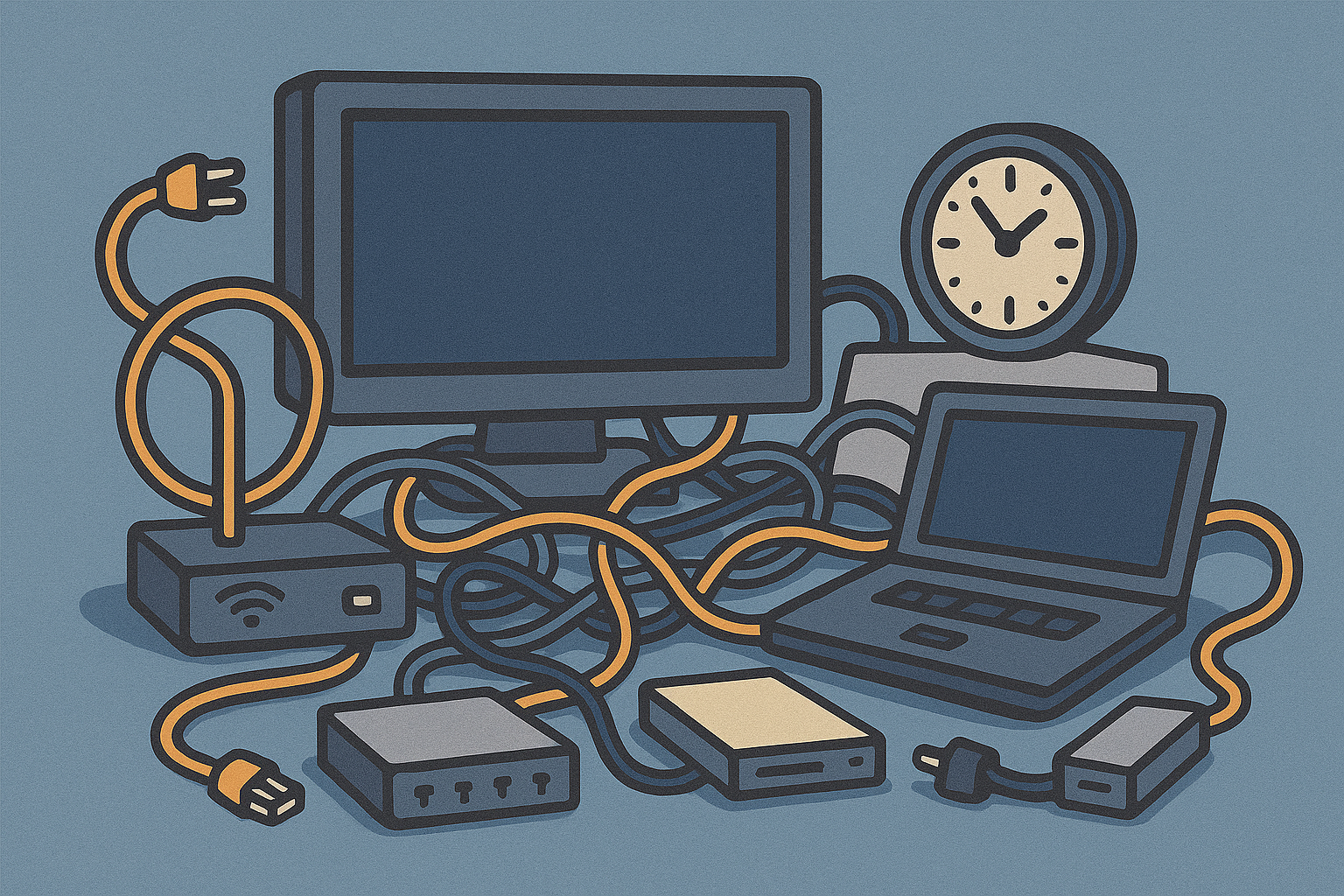
Many small organizations handle technology informally. One person resets passwords. Another sets up the Wi Fi router. Updates happen when someone remembers. This do it yourself approach to IT often feels practical, especially when budgets are tight and teams are small.
While this approach may seem cost effective on the surface, the real impact of DIY IT often shows up in less obvious ways. These costs tend to affect time, security, and the ability of people to do their best work.
Time Adds Up Faster Than Expected
When IT responsibilities are added to someone’s existing role, technology problems become interruptions rather than support. A slow computer, a printer issue, or an email sync problem might take an hour to fix. That hour comes directly out of time meant for core work.
Because these issues are scattered across days and people, they are easy to underestimate. Over time, the lost hours can result in delayed projects, longer workdays, and general frustration. Productivity losses rarely appear on a budget report, but they are very real.
Inconsistent Systems Create Daily Friction
DIY IT often grows piece by piece. Different computers may run different software versions. Files may be stored across desktops, cloud services, and email inboxes. Security settings can vary widely between devices.
This lack of consistency makes everyday tasks harder than they should be. Employees may waste time searching for documents or figuring out which tool to use. Adding a new employee can become a complicated process without a standard setup.
These small inefficiencies may seem minor on their own, but together they slow down teamwork and make workdays more stressful.
Security Gaps Are Easy to Overlook
Security is one of the areas where informal IT management often falls short. Basic protections require regular attention and a clear plan.
Common issues include
- Delayed software updates
- Weak or reused passwords
- No multi factor authentication
- Unclear or nonexistent backup practices
Most organizations do not ignore security intentionally. The challenge is that threats change constantly. Practices that felt safe a few years ago may no longer offer enough protection today.
When a security issue is discovered only after data loss or a breach, the consequences can include downtime, loss of trust, and unexpected recovery costs.
Backups May Not Work When Needed
Many organizations believe their data is protected because it is stored in the cloud or copied to an external drive. In reality, backups are often incomplete or untested.
Important questions to consider include
- Are all critical systems included
- How often backups run
- Whether data has ever been restored successfully
Without clear answers, backups may fail when they are needed most. Data loss from hardware failure, accidental deletion, or malicious activity can become far more disruptive and expensive than expected.
Short Term Choices Can Limit Growth
DIY IT decisions are often made to solve immediate problems. While this can save time in the moment, it sometimes creates challenges later.
Choosing tools that do not scale, buying hardware without a broader plan, or skipping documentation because a setup feels simple can all limit future flexibility. As an organization grows or changes, these early choices may require costly replacements or rework.
The Human Toll on Staff
An often overlooked cost of DIY IT is the pressure placed on employees who become unofficial technology support. These individuals may feel obligated to fix issues quickly, even when the problem is outside their expertise.
This added responsibility can lead to stress, burnout, or hesitation to take time off. It can also create dependency, where operations slow down if that one person is unavailable.
Technology should support people’s work, not quietly add to their workload.
Looking Beyond the Obvious Costs
Managing IT internally can make sense at certain stages, especially for small or early organizations. The key is understanding the full picture.
Beyond hardware and software costs, time lost, risks taken, and energy diverted from primary responsibilities all affect long term success. Recognizing these indirect costs helps organizations make thoughtful decisions about how they manage technology and support the people who rely on it every day.