
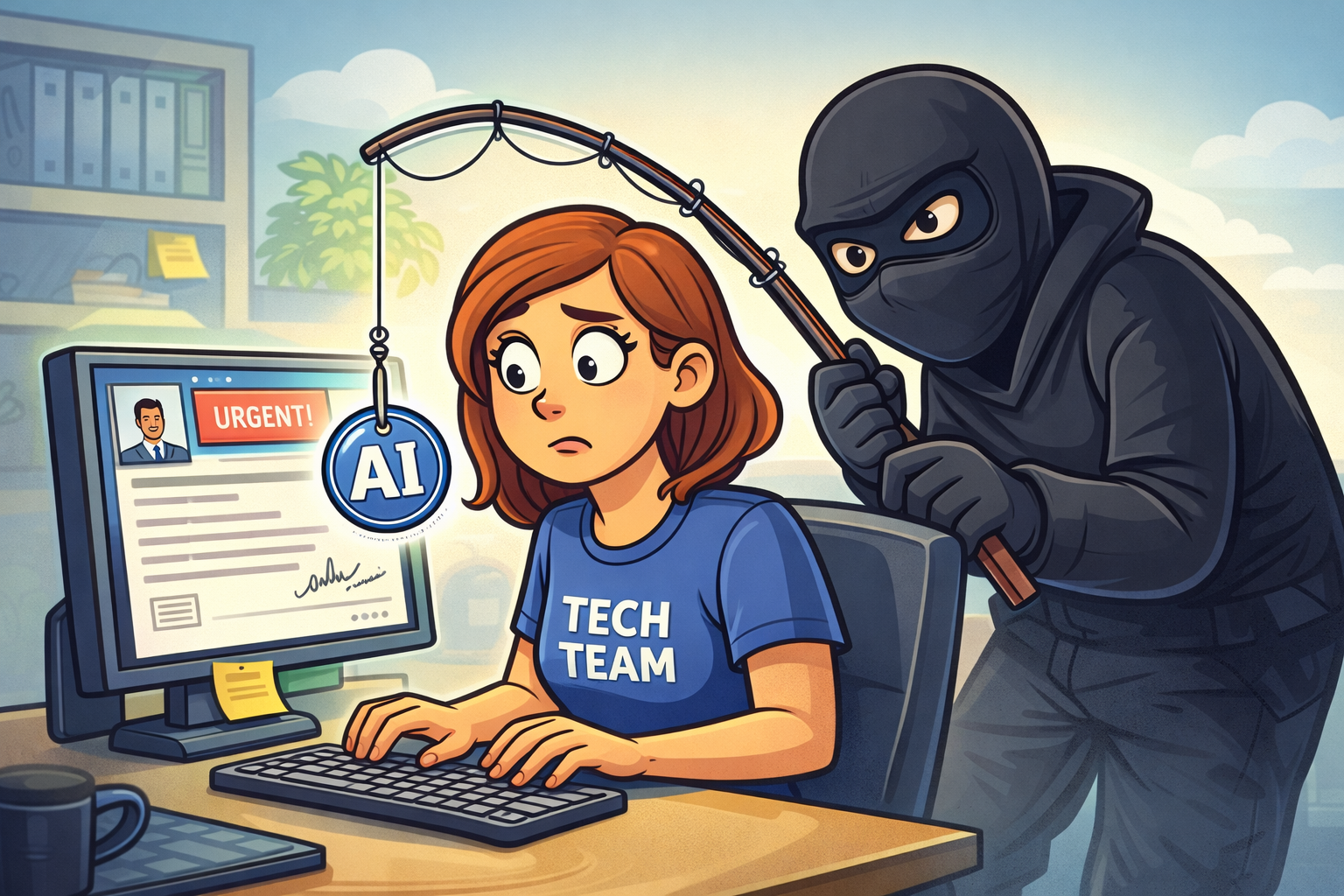
For years, phishing emails were relatively easy to spot. Poor grammar, awkward phrasing, suspicious links, and generic messaging made them stand out. Users were trained to look for the obvious red flags, and for a while, that worked.
That era is over.
Artificial intelligence has fundamentally changed how phishing attacks are written, delivered, and scaled. Today’s phishing attempts look professional, contextual, and increasingly indistinguishable from legitimate business communications. As we approach 2026, organizations can no longer rely on outdated assumptions about what a phishing email “should” look like.
How AI Has Changed Phishing
- Language and Presentation Have Matured
- Emails are now written in fluent, professional English
- Messages match corporate tone and formatting
- Grammar and spelling errors are largely eliminated
- Branding, logos, and signatures appear legitimate
- Messages mirror real internal or vendor communications
AI allows attackers to generate polished content instantly, removing one of the most reliable indicators users were trained to recognize.
- Attacks Are More Targeted and Context-Aware
- Messages are tailored to specific roles and departments
- Emails reference real vendors, invoices, or internal projects
- Attackers research staff using public and breached data
- Timing aligns with normal business workflows
- Messages often appear as replies within existing threads
Rather than sending thousands of generic emails, attackers now focus on fewer, higher-value targets with far greater success rates.
- Scale and Speed Have Increased
- AI enables rapid creation of multiple message variations
- Attackers test and refine emails based on success rates
- Campaigns adapt faster than traditional filters can respond
- Attacks escalate within minutes of initial compromise
Once an account is compromised, attackers move quickly to exploit trust before detection occurs.
- Detection Is Becoming More Difficult
- Visual inspection is no longer reliable
- MFA reduces risk but does not prevent credential theft
- Email security tools struggle with highly customized messages
- Trusted internal accounts are frequently abused
- Users are pressured to act quickly and bypass caution
- Phishing now succeeds by exploiting trust and routine, not confusion or poor execution.
What Phishing Will Look Like in 2026
- Fewer mass emails, more precision targeting
- Increased impersonation of executives and finance staff
- Greater focus on payment changes and access requests
- Voice and SMS phishing that sounds natural and informed
- Attacks embedded into everyday business processes
Phishing will continue to shift from a technical problem to a behavioral and operational risk.
Preparing for the New Reality
Phishing in 2026 will not look suspicious. It will look familiar, professional, and routine. Organizations that rely solely on legacy training or technical controls will continue to be exposed.
Effective defense now requires a combination of technology, process, and ongoing education. Clear verification procedures, role-based training, and proactive monitoring are no longer optional. They are essential to protecting your organization’s people, finances, and reputation.
If you would like more information on phishing prevention, cybersecurity best practices, or how to better prepare your organization for modern threats, our team is here to help. Reach out to us to learn how proactive cybersecurity planning can reduce risk and strengthen your overall technology posture!